moon base construction is on NASA’s agenda, as the agency aims to land astronauts on the lunar surface within two years. This ambitious plan promises to advance our understanding of space.
NASA’s Vision for a Moon Base
NASA is embarking on an ambitious project to lay the groundwork for a sustainable moon base by the mid-2020s. The space agency envisions a multi-phase approach that will not only establish a permanent presence on the lunar surface but also serve as a stepping stone for future missions to Mars.
According to NASA officials, the construction of a moon base will be crucial for advancing human exploration beyond Earth. The agency’s plans focus on several key components:
- Robotic Precursor Missions: These missions will scout potential landing sites and assess resources, such as water ice, that are vital for sustaining life.
- International Collaboration: NASA aims to work with international partners to share knowledge, technology, and resources, ensuring that the moon base is a global effort.
- Utilization of Local Resources: By employing in-situ resource utilization (ISRU), NASA plans to utilize materials found on the moon to minimize the amount of cargo that needs to be launched from Earth.
- Modular Base Design: The moon base will be designed in a modular fashion, allowing for easy expansion and upgrades as technology evolves.
With these strategies in place, NASA’s vision for moon base construction is not just a dream but a tangible goal that could redefine humanity’s relationship with space.
Timeline for Moon Base Construction
The timeline for moon base construction has been outlined with ambitious goals set by NASA. According to recent announcements, the agency aims to establish a sustainable presence on the Moon by the end of the decade. Here are the key milestones in the proposed timeline:
- 2024: NASA plans to land the first woman and the next man on the lunar surface as part of the Artemis program. This mission will lay the groundwork for future construction efforts.
- 2025: Initial robotic missions will be launched to scout potential sites for the moon base, ensuring that the chosen location can support long-term habitation.
- 2026-2028: Development of the necessary technology for moon base construction will take place, including habitats, power systems, and life support infrastructure.
- 2029: The first modules for the moon base are expected to be deployed, marking a significant step towards establishing a permanent lunar outpost.
- 2030 and beyond: NASA envisions expanding the moon base with additional modules, research facilities, and sustainable systems to support human life and scientific research.
This timeline reflects NASA’s commitment to advancing lunar exploration and establishing a foothold on the Moon, setting the stage for future missions to Mars and beyond.
Benefits of a Lunar Presence
The construction of a moon base presents numerous benefits that extend beyond lunar exploration. Firstly, establishing a permanent presence on the Moon will serve as a vital stepping stone for future missions to Mars and beyond. By utilizing the Moon as a testing ground for technologies and life-support systems, NASA can refine its approach to long-duration space travel.
Additionally, a lunar base offers significant scientific opportunities. Researchers will gain access to unique geological features and resources that are not available on Earth. This can lead to breakthroughs in understanding the origins of the solar system and potential advancements in various fields, including astronomy and geology.
Moreover, the Moon’s low gravity environment presents a unique opportunity for various industries. Companies can experiment with new materials and manufacturing processes that may not be feasible on Earth. The potential for mining lunar resources, such as water ice and rare minerals, could also support sustainable operations both on the Moon and in further space missions.
International collaboration is another key benefit. A moon base construction initiative can encourage partnerships among nations, fostering peaceful relations and shared scientific progress. As countries join forces to explore and utilize lunar resources, a sense of global unity in the pursuit of knowledge and innovation may be achieved.
In summary, the establishment of a moon base is not just a landmark achievement for NASA; it is an investment in humanity’s future in space.
Technologies Needed for Moon Base
To successfully establish a permanent moon base, several advanced technologies are essential. These innovations will not only facilitate construction but also ensure the sustainability of human life on the lunar surface.
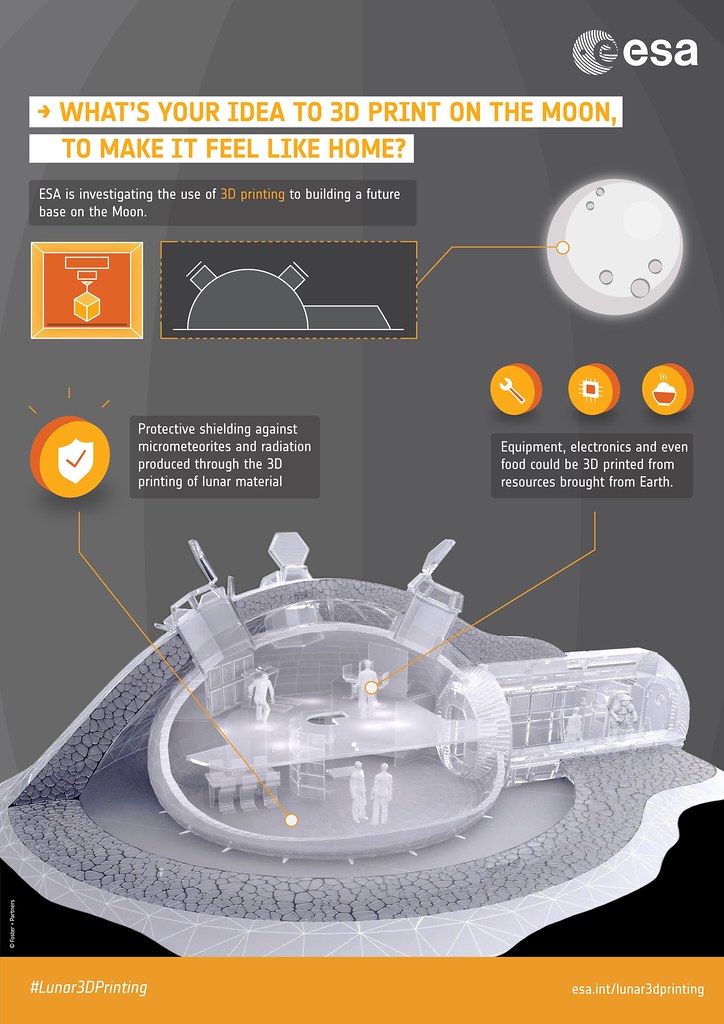
One of the primary technologies required is 3D printing. This technique can utilize lunar regolith, the fine dust and rocky material on the moon, to create habitats and infrastructure. By reducing the need to transport materials from Earth, 3D printing significantly lowers costs and enhances efficiency in moon base construction.
Another critical technology is life support systems. These systems must efficiently recycle air and water while providing food for astronauts. Innovations in hydroponics and bioregenerative systems will be vital for long-term habitation, allowing crews to grow food on-site.
Additionally, robotics will play a crucial role in the construction process. Autonomous robots can perform hazardous tasks, such as transporting materials and assembling structures, reducing the risk to human workers. This capability is particularly important in the harsh and unpredictable lunar environment.
Finally, energy solutions must be developed to power the base. Solar panels and nuclear power sources are among the most promising options, providing the necessary energy to support ongoing operations.
Integrating these technologies is vital for the success of NASA’s ambitious plans for moon base construction, paving the way for future lunar exploration and habitation.
Challenges in Building on the Moon
Building a moon base presents numerous challenges that must be addressed to ensure the success of NASA’s ambitious plans. The harsh lunar environment poses significant obstacles, including extreme temperatures, radiation exposure, and micrometeorite impacts. These factors necessitate robust engineering solutions and materials capable of withstanding such conditions.
Another challenge is the logistics of transporting materials and equipment from Earth to the Moon. The cost and complexity of lunar missions require careful planning and innovative approaches to resource management. Developing in-situ resource utilization (ISRU) techniques will be critical for utilizing lunar materials, potentially reducing the need for resupply missions from Earth.
Furthermore, the psychological effects of isolation and confinement on astronauts must be considered. Extended missions on the Moon could lead to mental health issues, making it essential to incorporate designs that promote well-being, such as adequate living spaces and recreational facilities.
Additionally, establishing a sustainable power source for the moon base is vital. Solar energy is a potential solution, but it requires effective storage systems to manage the lunar night, which lasts for about 14 Earth days.
In summary, while the challenges in building a moon base are significant, addressing them through innovative technologies and thorough planning will play a crucial role in NASA’s quest for a sustainable lunar presence.
International Collaboration in Space
International collaboration in space exploration has become increasingly vital as nations work together to achieve ambitious goals such as moon base construction. Countries around the world recognize the benefits of pooling resources, expertise, and technology to establish a sustainable human presence on the lunar surface.
Significant partnerships are already forming, with key players including:
- The United States: Leading the charge with NASA’s initiatives and funding towards a moon base.
- The European Space Agency (ESA): Contributing advanced technology and research capabilities.
- Japan: Offering robotics and lunar exploration missions to enhance construction efforts.
- Russia: Sharing its long history of space expertise and lunar mission experience.
- India: Bringing innovative approaches and cost-effective solutions to the table.
Collaboration extends beyond governmental agencies, with private companies also playing a crucial role. Commercial partnerships can accelerate development and lower costs through innovative practices and competition. For instance, companies specializing in robotics and construction technology are poised to provide the necessary tools for moon base construction.
Joint missions, shared funding, and knowledge exchange will ultimately pave the way for a successful lunar base. By working together, nations can overcome challenges and make significant strides toward establishing humanity’s next foothold in space.
Public Interest in Lunar Missions
The excitement surrounding lunar missions has surged in recent years, particularly with NASA’s commitment to moon base construction. Public interest is largely fueled by the prospect of human exploration beyond Earth, as well as the potential for scientific discoveries and technological advancements.
People are captivated by the idea of a permanent presence on the Moon, which could serve as a launchpad for future missions to Mars and beyond. Surveys indicate that a significant portion of the population supports government funding for lunar exploration, viewing it as a critical step in humanity’s quest for knowledge and expansion into the cosmos.
Many enthusiasts and experts believe that the construction of a moon base could inspire a new generation of scientists and engineers. This renewed interest in space exploration is reflected in several key areas:
- Educational Programs: Schools and universities are increasingly incorporating space science into their curricula, encouraging students to consider careers in STEM fields.
- Public Engagement: NASA and other space agencies are organizing events and outreach programs to inform the public about lunar missions and the importance of moon base construction.
- Media Coverage: Documentaries, podcasts, and articles about lunar exploration are gaining traction, capturing the imagination of audiences worldwide.
As interest grows, so too does the hope that a moon base will not only advance scientific knowledge but also foster international collaboration and inspire future generations.
Future of Human Space Exploration
The future of human space exploration is poised to undergo a significant transformation with the ambitious plans for moon base construction. As NASA aims to establish a sustainable human presence on the Moon, this initiative not only serves as a stepping stone for future Mars missions but also heralds a new era of scientific discovery and international cooperation.
Key aspects of this future include:
- Increased Scientific Research: A moon base would enable scientists to conduct experiments in an environment that cannot be replicated on Earth, leading to breakthroughs in various fields, including astronomy, geology, and biology.
- Resource Utilization: The Moon holds valuable resources, such as water ice and helium-3, which could support life on the lunar surface and fuel future space missions.
- Technological Advancements: The challenges of building and maintaining a moon base will drive innovation in various technologies, from life support systems to habitat construction.
- Global Collaboration: By partnering with other nations and private entities, NASA’s moon base construction can foster peaceful relations and shared goals in space exploration.
Overall, the establishment of a lunar base is a critical step toward establishing a robust human presence beyond Earth. As we prepare for this exciting chapter, the potential for discovery and advancement is boundless.
Recent advancements in technology have paved the way for more efficient methods in moon base construction. As NASA collaborates with private companies, innovative strategies for moon base construction are becoming increasingly viable.
By europeanspaceagency via Openverse